Showing posts with label Missouri River. Show all posts

August 17, 2018

Knowing: An Internship Reflection

Hello Fellow River-Lovers,

I'm popping in for one last blog post as Missouri River Relief's Education Assistant Intern. It's been a wild ride since I started in May, so I'm going to take this opportunity to reflect on my experiences.

I began this internship before my spring semester was even over. I stayed up all night finishing a paper so I could turn it in early and head to Kansas City for my first weekend on the job and my first river clean-up. Before I even had time to breathe, I hurriedly packed my bags, brewed one last cup of coffee, and hustled out the door for the 2018 Kansas City Teacher Workshop and River Clean-Up. 

Here’s what I knew in that moment:
  1. I knew that this was a cool opportunity. I mean… how many internships involve camping along the Missouri River with a full view of the Kansas City skyline?
  2. I knew that I was lucky to have this internship, especially because I’d never had one before, and I knew I had a lot to learn.
  3. I knew it might rain on Saturday.
Here’s what I didn’t know in that moment:
  1. I didn’t know how many river dogs I would meet throughout the summer.
  2. I didn’t know how long an 8-hour work day really is.
  3. I didn’t know I’d meet the most incredible kids at Missouri River Academy, or that I’d still be missing them when summer ended.
  4. I didn’t know how hard the staff at non-profit organizations work just to make ends meet.
  5. I didn’t know how refreshing River AC could be, or that sunsets are prettiest when watched river-side.
  6. I didn’t know about wing dikes or the Steamboat Arabia or the lifecycle of a pallid sturgeon.
  7. I didn’t know how intense my Chaco tan would get.
  8. I didn’t know how to post to Facebook Live (oh wait, I still don’t…).
  9. I didn’t know how much I enjoyed teaching kids about the natural world.
  10. I didn’t know I would fall head-over-heels in love with the Missouri River and Missouri River Relief.
That’s a list of things I didn’t know when I started this internship, but that I know now. The list of things I still don’t know is much longer (so long it’s kind of scary), but here’s the thing: this internship, and Missouri River Relief as a whole, has got me so excited to keep figuring out what I don’t know, to jump into new experiences, to never stop learning, to crank up the river AC and embrace my weird. And for that, I’m eternally grateful.

I wish words could convey the way my heart swells as I write this. I wish words could convey my gratitude to Kristen (the Education Director of Missouri River Relief) for taking me under her wing, for always teaching me, for being patient and wise and funny and someone I’ll look up to for the rest of my life. I wish words could convey how much I’ll miss this when it is gone.


Of course, words don’t get the job done (they never do!); so I resort to pictures, a firm believer in the power of visuals. These are some of my favorite shots I’ve taken throughout my internship. I hope they more adequately convey the emotions that my words can’t.

Kansas City Teacher Workshop and River Clean-up:

This was one of the first photos I ever took for MRR. It’s crazy how the time has flown. I packed my bags for KC, I blinked, and then summer ended!

I was awestruck at my first river clean-up. The crew worked like clockwork in the way they gathered, tallied, and disposed of all the trash the volunteers had gathered earlier in the day. 

Sunset Excursion:


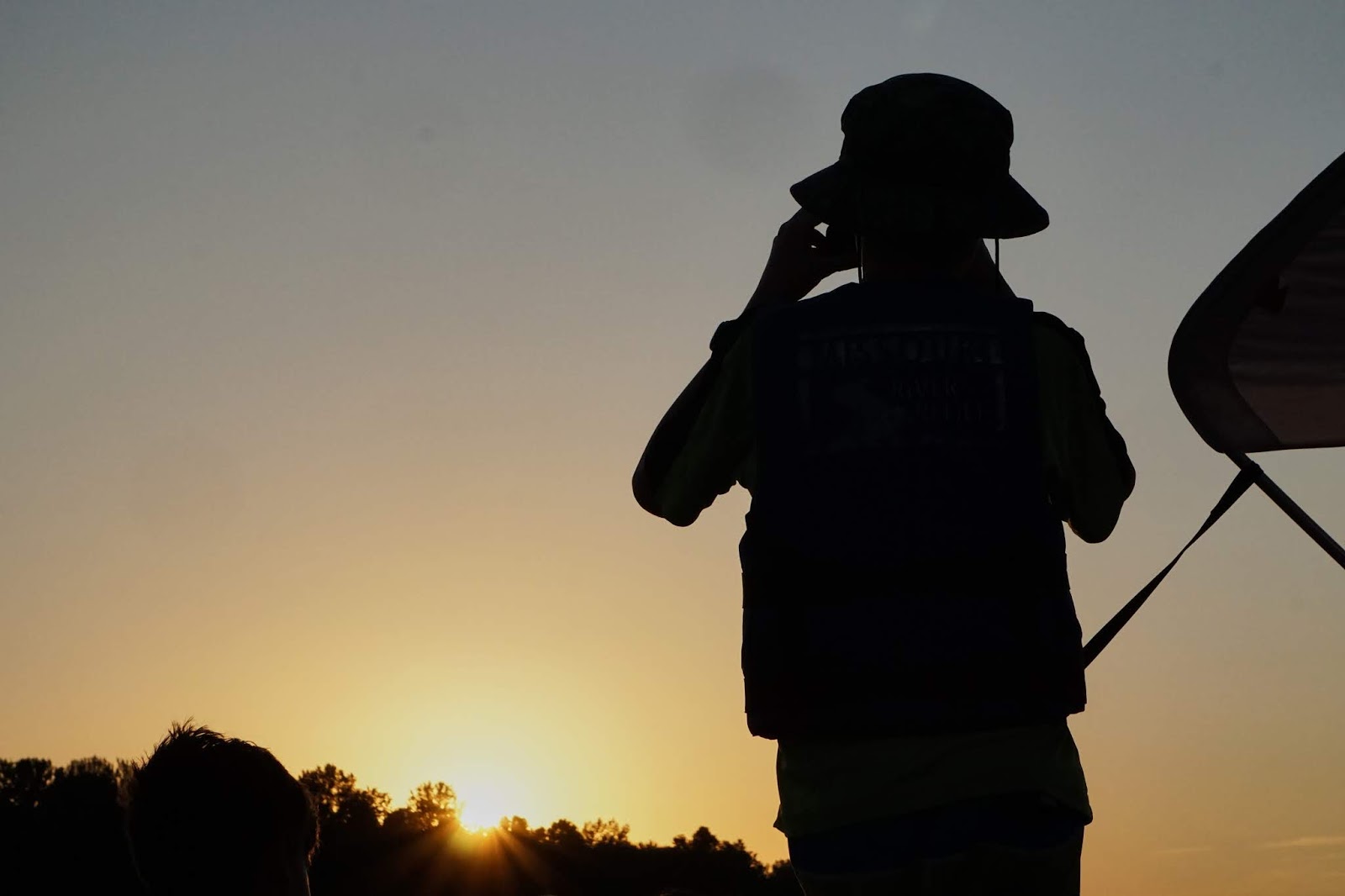
This event was awesome because 1. We got to be out on the river as the sun was setting and 2. I got to mess around with my camera and take fun pictures like the whole time!
I loved watching Kristen do what she does best all summer: teaching! With every program, I learned countless things from her, and I’m so excited to see how she’s going to continue growing Missouri River Relief’s education programs.  
I’ve said it before and I’ll say it again: sunsets are best when watched river-side.
Missouri River Academy:

I grew up going to summer camp, and my camp memories are some of the happiest in my life. I was overjoyed when I learned that I’d (technically) get to go to camp again this summer through Missouri River Academy!

One of the coolest parts of River Academy was watching the kids pursue their own passions. Seeing their faces light up and listening to them ask engaging questions about subjects they were interested in brought me so much joy. 
This was one of many scenic Academy views.
It was a hot day for a prairie walk but plant identification in the shade made up for it. 
I’ve learned from Kristen’s presentations that our section of the Missouri River is unique and that other parts of it look completely different. That makes me grateful for views like these but it also makes me want to explore more of the Big Muddy.
During the Academy sunset cruise we did some reflection activities. Kristen was authentic with the kids and they were authentic back to her. It was such a real moment and everyone felt connected. I’ll never forget it.
The kids were told to explore a stream and find an animal to observe in their cup. This was the result and the kids were so captivated!
This photo was taken before the MDC treated us to an Asian Carp dissection and organ identification. Some kids loved it; some kids hated it. I, for one, couldn’t get enough!
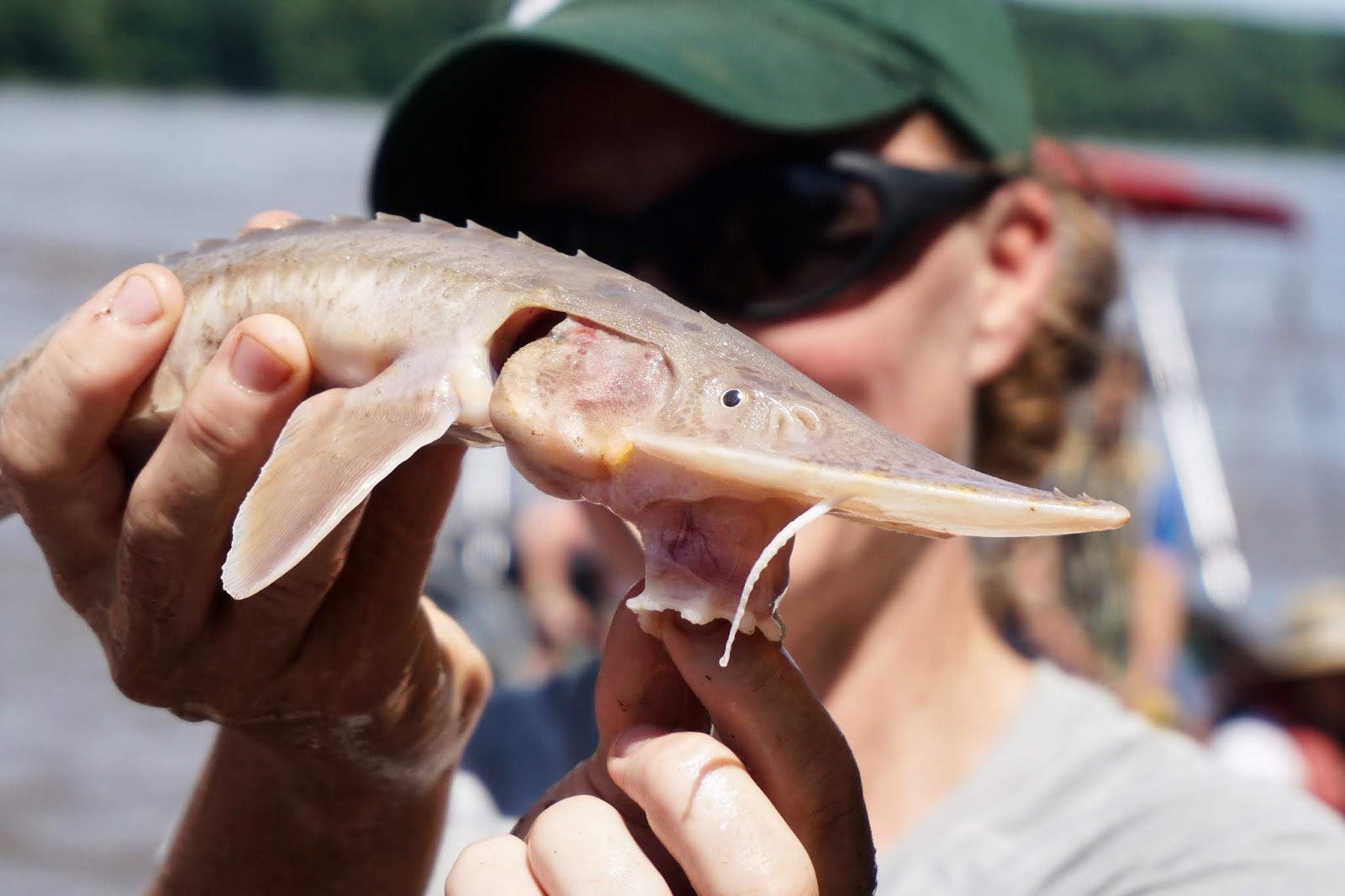
Being able to see (and photograph) live Pallid Sturgeon was awesome for me, especially because we bring preserved Pallid Sturgeon in jars with us to every education program! 
Only at river camp do your campers bring you Asian Carp eyes and hearts. Such a sweet gesture!
STEM Challenges:
For the past few weeks, I’ve been working on creating videos to introduce some STEM Challenge lessons Kristen has developed. The project put my journalism skills to the test and was so enjoyable for me. My favorite part of the assignment was going out to the river to gather b-roll footage. Even though my aim was to shoot video, I couldn’t resist capturing some photos too. I could’ve stayed out there with my camera all day.
Missouri River Relief: thank you, thank you, thank you a thousand times more from the bottom of my river-loving heart. 
The following two photos were not taken by me, but I am in them and they’re some of my favorites. I had to include them because I think they capture pivotal moments in my internship. 
These are only half of the kids who attended Missouri River Academy, but every kid who went has a special place in my heart. It was the best week!
This another shot from my first weekend with Missouri River Relief. In this moment I was giddy with anticipation for the rest of the summer and the rest of my time with MRR. Reflecting back, I can say that my internship more than exceeded my expectations.
This reflection has been all about knowing; what I knew, what I didn’t know, what I still don’t know. So along the lines of knowing, here are some things you, the next summer intern, should know before you start at River Relief:
  1. Test yourself to see how resourceful you can be – google is a valuable resource. Try and exhaust all options before you ask Kristen questions. Doing that will make you more confident, clear, specific, and concise if you do end up needing her help. You’ll find yourself googling silly things like “How do I edit my signature in outlook” or “How to send a professional email to another business” and it will all be worth it in the end.
  2. When helping people into boats: no matter how many times you tell people to get in from the side, they will still get in from the front. SO, position yourself strategically. You stand in front of the boat, close to the side from which people will get in. That way people will be forced to get in from the side. Put your hand out in front of you over the boat to help people in.
  3. As soon as you’re offered the job, start thinking about what you want to learn throughout the summer. I think the MRR staff asked me that question at least 5 times on my first day, and I wasn’t exactly sure what to tell them. They do such a great job of tailoring your internship to you so that you can get the most out of your experience. I told them I was a journalism major who wanted to spend her life communicating about the environment in some capacity, but I wasn’t sure what that would look like. They immediately gave me blog posts to write, photography assignments, they had me organize their working media lists, I pitched a story to a magazine, and they had me work on some graphics and design for them. It was all a blast, all such good stuff to put on my resume, and it was so unique to my desires and interests. I don’t think every job will put your needs/wants first like that, so take advantage while you can!
  4. If this is your first office job, figure out how you’re going to adjust to working in an office for forty hours each week. I definitely struggled with this in the beginning of my time with MRR, especially in the late afternoon hours and especially on Mondays and Fridays. Here’s what I did that helped: I did the hard stuff first – the stuff I was least excited about or that I knew would take the most brain power. I did stuff that involved movement or little brain power after lunch and right before the end of the day. I also kept a notebook near me to jot lists down as random thoughts popped into my head. Sometimes these thoughts were MRR related, sometimes they were not, but either way, getting them on paper and out of my head helped me be more productive in the long run.
  5. The rest of the staff is busy so they won’t follow up with you about everything. It’s your job to push your projects over the finish line, even if it seems like no one else is really involved or still pursuing them. It might seem like you’re annoying the staff, but in the end they’ll thank you for doing the stuff they’d never have time for. This will be the way you can have a lasting impact throughout your internship. If you don’t tie up your loose ends they’ll just be passed on to the next intern; try and avoid this.
  6. Enjoy every minute of it, even the hard stuff and the long days, because before you know it Kristen will be asking you to reflect on your experiences and all you’ll be wanting is one more week, one more day.

May 24, 2018

Job Point Education Program - May 23, 2018

By: Claire Hassler, Missouri River Relief

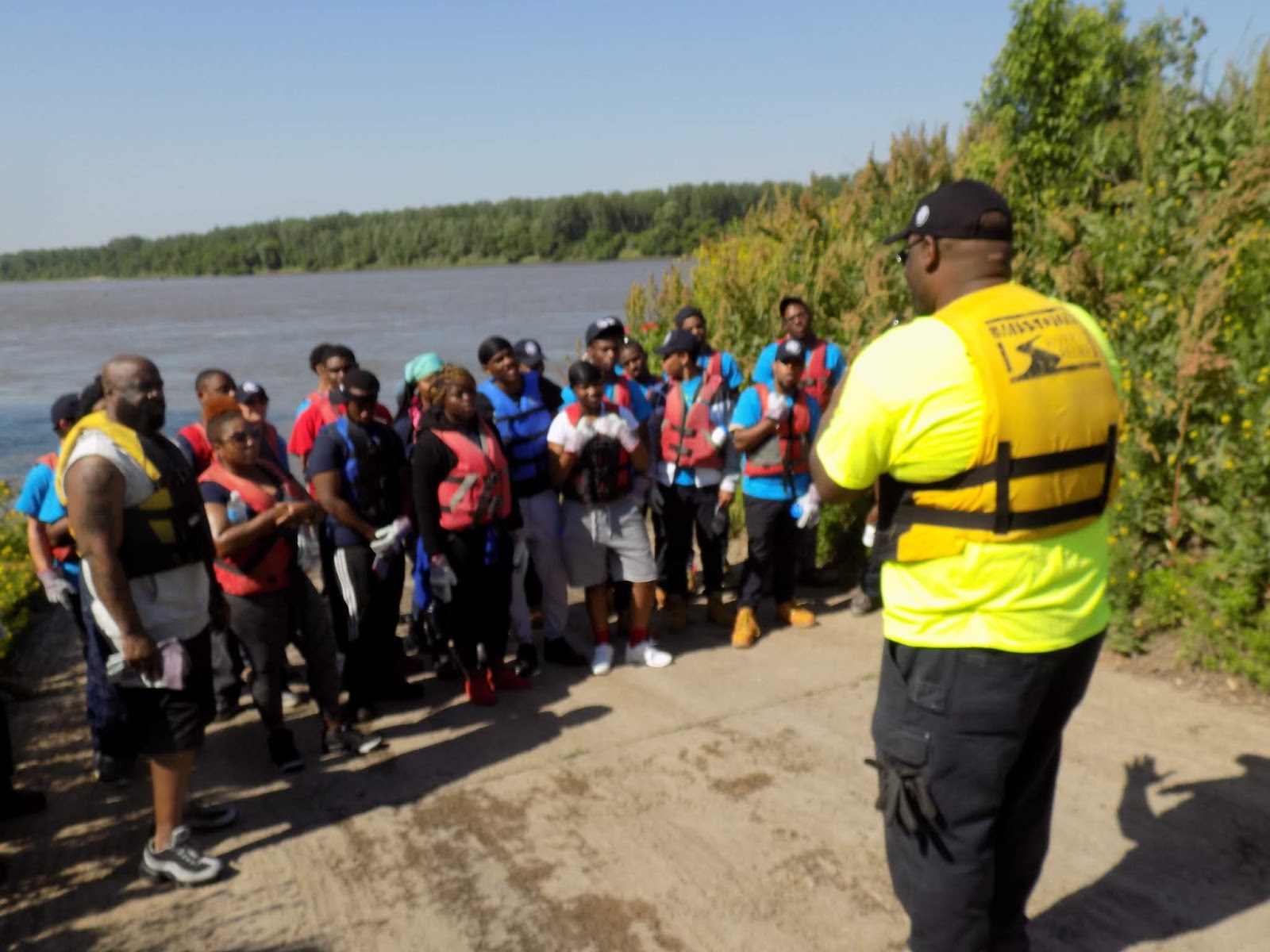
Well, that’s a wrap on our “Stewardship on the Missouri River” education program! Missouri River Relief (MRR) spent the whole day at Katfish Katy’s in Huntsdale, Missouri working with AmeriCorps members from Youth Build and Job Point. The members were young adults, ages 16 to 24, from St. Louis, Kansas City, and Columbia, Missouri. They investigated the river at stations on land and then worked together in service of the Missouri River by picking up trash.
Morning Welcome and Introduction to the Missouri River
For this education program, we partnered with Job Point, which is an employment center that helps people with career planning and job placement assistance. Job Point was an excellent partner and this program wouldn’t have been possible without them. Thank you Job Point!

We started off the day by introducing the students to the Missouri River, Missouri River Relief, and Job Point. We were also grateful to have Senator Blunt’s Community Liaison Ailey Pope and the Boone County Presiding Commissioner Dan Atwill join the education program and give words of support.
Words of support and encouragement from Senator Blunt's Community Liaison
There were about 60 students at this program. We split them into two groups, 30 in each, because the day was divided into two segments: On the Water and On the Land.

On the Land
For one portion of the day, students rotated through three stations on land to learn more about the longest river in North America. The first On the Land station was called "We All Live Downstream." It was a stream table model of the Missouri River put on by Boone County Storm Water Education.


Hands-on and minds-on while learning how the river has changed over time 
Theresa Thomas and Lynne Hooper presented and instructed the students. They taught participants about how stormwater becomes contaminated and also how best management practices improve the quality and reduce the quantity of stormwater that enters the Missouri River.


Studying the kinds of bugs that live on the Missouri River
The second land station was called "Through the Eyes of a Scientist" and it was all about using microscopes to investigate macroinvertebrates that live in the Missouri River.  Amy Meier and Lily Kennedy with the Missouri Department of Conservation guided the students with the microscopes and showed them all kinds of bugs that live on the Missouri River. They taught participants about adaptations and assessing the quality of a stream site based on the macroinvertebrates that live there.

Station three on the land was a guided bird observation hike hosted by Paige Witek with the Missouri River Bird Observatory. Paige taught the students how to use binoculars and showed them bird skull replicas of species that live along the Missouri River. 
Giving pointers on how to identify the difference on species of hawks
On the hike, participants explored the natural history and adaptations of birds that live along the river and got to practice finding the moving birds in their binoculars. After a lunch break, the On the Land group and On the Water group switched places.


On the Water

After a safety talk and getting fitted for life jackets, participants headed out onto the river! MRR had three boats on the water. 
For a lot of AmeriCorps members, it was their first time on the Missouri River. 
Our experienced boat captains and deckhands gave the students a guided tour, pointing out an eagle’s nest as they passed it and sharing the history of the river. 


Looking in all the right places for river trash

Enjoying the river breeze with beautiful views of the bluffs 
Some boats also stopped along the way to pick up trash. Here is the trash tally of what they found:
  • 21 bags of trash!
  • 55 gallon drum
  •   2 large Styrofoam chunks
  • 2 Large plastic tubs
  • Cattle feeding tub
  •  Large cooler (coffin cooler)
  • Plastic tool box
  • Large cooler
  • 3 tires on rim
  • Box tv
  • Fridge door
For many students, it was their first time out on the river. Because of this, a lot of growth happened.
At the end of the day as part of our group reflection, we did a whip around activity. The students stood in a giant circle and went around one by one, saying one word they used to describe the Missouri River before today’s program and one word to describe it after today’s program. 

Here are some things the students said: 
  • Before / After:
  • Big / beautiful
  • Trashy / cool
  • Watery / peaceful
  • Dirty / relaxing
  • Gross / refreshing
  • Dirty / fun
  • Scary / chill
  • Dirty / serene
  • Big / tranquil
The day was hot, but our students and presenters were champions and finished the day with smiles on their faces and chilled towels on their heads!

A lot of people helped make this program happen. A big thank you to our experienced boat drivers and deckhands: Steve Schnarr, Kevin Tosie, Jeff Boot Barrow, Patty Farrar, Steve Sadich, and Mike Crist. And our amazing presenters included Amy Meier, and Lily Kennedy with the Missouri Department of Conservation, Theresa Thomas and Lynne Hooper from Boone County Stormwater and Paige Witek from the Missouri RiverBird Observatory.

If you would like to learn more about MRR education programs, please contact Education Director Kristen Schulte at kristen@riverrelief.org, and check out our education program page!

May 17, 2018

Kansas City Educator Workshop, May 10-11, 2018

By: Claire Hassler, Missouri River Relief

Last week, Missouri River Relief (MRR) was in Kansas City for a two-day educator workshop. Three teachers from the Kansas City area gathered with us to learn more about the Missouri River and how they can integrate the river into their classrooms. The teachers’ students ranged from elementary, to middle school, to high school. Regardless of the different ages of their students, all the teachers were eager to learn and bring exciting new content to their classrooms.

Ready for a day on the river!
Day one: 

Where is the best place to start a Missouri River educator workshop? On the river! We did just that. Our group met by the boat ramp of Kansas City Riverfront Park. After all the teachers arrived we introduced them to our crew: Kristen Schulte (MRR education director), Jeff “Boot” Barrow (MRR executive director), and myself, Claire (MRR education assistant intern). The teachers also went around the circle to talk about their goals for the workshop and their history
with the Missouri River. One of the teachers and I had never been on the river before, so all of us were excited to get out on the boat.

After a safety talk and life jacket fitting, we were off! While Jeff motored us downstream, everyone got acquainted with the river. We shared observations that started with “I notice, I wonder, It reminds me of…” At one point we noticed a memorial site for a fisherman, which included a giant bobber and some flowers. We wondered if that was his favorite spot on the river and how often he went there to fish.

We enjoyed incredible views of the Kansas City skyline from our boat. It was the perfect mixture of city and nature.
As we headed back upstream, Kristen taught about the history of the Missouri River. We visited the rock ledge that “gave birth to Kansas City” because it was the first place where everyone would dock their boats. The teachers lamented that the rock is only accessible from the river as they would’ve loved to bring their students out to see it.

Kristen shows the teachers the rock ledge that helped found Kansas City.
We learned about the ecology of the Missouri River and how it has changed over time, both naturally and artificially. Kristen taught us all about wing dikes, which have been a huge driving force of change along the Missouri River. Wing dikes are rock ledges that jut out from the riverbank and were built by the U.S. Army Corps of Engineers to control the width of the river and keep the current away from the bank. The teachers had fun guessing where the wing dikes were located under water, looking for rock piles on the bank or debris floating in the river that seemed to be caught on something under the surface.

The group pulled over on a shady bank to learn more about the ecology of the Missouri River.
We ate lunch at Kaw Point, where the Missouri River and Kansas River intersect. As we were pulling up to the bank, Asian carp leaped out of the water to greet us. Luckily, none landed in the boat! We munched on chicken salad sandwiches and M&M cookies, applied fresh layers of sunscreen and talked about the joys and hardships of teaching, all while gazing at the beautiful Kansas City skyline.

One of our teachers poses by a statue of Lewis and Clark during our lunch break at Kaw Point.
After lunch and while our food digested we did a “walk and talk.” We hiked around Kaw Point while Kristen asked us questions, which we then discussed in pairs. We talked about living things on the banks of the Missouri River and at the bottom of the river, and how the various environments impact the way species live and adapt. We even saw some snow geese!

Kristen shows the group a map of varying depths of the Missouri River during a “walk and talk.”
For the second half of the day, we focused on the pallid sturgeon. Eager to escape the heat, Jeff drove the boat to a shady bank where we could get out and relax in the sand. We passed around stations that had activities relating to the pallid sturgeon’s life cycle and hunting behaviors. Kristen also told us about planning and management strategies regarding the pallid sturgeon, as it is an endangered species.

Teachers examine different kinds of sturgeon, held up in jars by Kristen.
We took one last river cruise back to the boat launch and then the teachers departed, ready to rest up for another day of learning on Friday.

Day two: 

On Friday morning Kristen and I met the teachers at the MU Extension Office in the River Market District of Kansas City. We would spend the day in the classroom learning how to apply the knowledge from the day before.

To start off, Kristen shared a structured outline of a Missouri River lesson plan with the teachers to help guide them with their own lesson planning. We also went over how people learn and modeled that with an activity and lesson about food webs in the Missouri River.

Teachers listen and take notes as Kristen presents the Missouri River lesson plan.
We let things simmer and took a tour of the Arabia Steamboat Museum. We learned about how people navigated the Missouri River in the 1800s with steamboats, and how dangerous a steamboat journey really was. Here’s a wacky fun fact: When the Arabia sunk, it was buried so quickly with sediment that everything was pristinely preserved, even the food on board. So when the crew excavated the site 132 years later, they found perfectly good buttermilk, pickles, and Champaign. They even ate the pickles and drank the Champaign themselves!

An enthusiastic tour guide introduces us to the Arabia Steamboat Museum and all the unburied treasures inside it.
As tasty as 132-year-old pickles sounded, Neopolitan pizza was more our speed. We headed to Il Lazzarone Pizzeria for lunch. The pizzas were served individually, so we thought we’d never be able to finish all of our food. As it turned out, that wasn’t an issue. Each of us finished every last bite.

We all gasp about the size of our pizzas and wonder how we’ll ever finish them all.
For the final stretch of the educator workshop, the teachers drafted and modified lesson plans to incorporate what they’d learned about the Missouri River the day before and make learning more experiential for their students. All three of the teachers decided to go above and beyond and tackle modifying an entire unit instead of just one lesson. After they had time to work on their plans individually, we convened in a group and each teacher shared what they had come up with.

We ended the workshop with a group reflection. Each teacher had come with different experience and prior knowledge of the river, so each got something different out of the last two days.
River and eager to bring it into the classroom to inspire their students too. The teachers said their experience was enriching and they felt more comfortable and capable teaching about the Missouri River in their classrooms.

If you would like to learn more about MRR educator workshops, please contact Education Director Kristen Schulte at kristen@riverrelief.org, and check out our education program page for registration information, financial aid opportunities, and upcoming events. See you on the river!