Showing posts with label Missouri River Clean-up. Show all posts

May 24, 2018

Job Point Education Program - May 23, 2018

By: Claire Hassler, Missouri River Relief

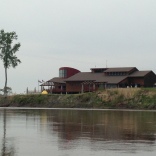
Well, that’s a wrap on our “Stewardship on the Missouri River” education program! Missouri River Relief (MRR) spent the whole day at Katfish Katy’s in Huntsdale, Missouri working with AmeriCorps members from Youth Build and Job Point. The members were young adults, ages 16 to 24, from St. Louis, Kansas City, and Columbia, Missouri. They investigated the river at stations on land and then worked together in service of the Missouri River by picking up trash.
Morning Welcome and Introduction to the Missouri River
For this education program, we partnered with Job Point, which is an employment center that helps people with career planning and job placement assistance. Job Point was an excellent partner and this program wouldn’t have been possible without them. Thank you Job Point!

We started off the day by introducing the students to the Missouri River, Missouri River Relief, and Job Point. We were also grateful to have Senator Blunt’s Community Liaison Ailey Pope and the Boone County Presiding Commissioner Dan Atwill join the education program and give words of support.
Words of support and encouragement from Senator Blunt's Community Liaison
There were about 60 students at this program. We split them into two groups, 30 in each, because the day was divided into two segments: On the Water and On the Land.

On the Land
For one portion of the day, students rotated through three stations on land to learn more about the longest river in North America. The first On the Land station was called "We All Live Downstream." It was a stream table model of the Missouri River put on by Boone County Storm Water Education.


Hands-on and minds-on while learning how the river has changed over time 
Theresa Thomas and Lynne Hooper presented and instructed the students. They taught participants about how stormwater becomes contaminated and also how best management practices improve the quality and reduce the quantity of stormwater that enters the Missouri River.


Studying the kinds of bugs that live on the Missouri River
The second land station was called "Through the Eyes of a Scientist" and it was all about using microscopes to investigate macroinvertebrates that live in the Missouri River.  Amy Meier and Lily Kennedy with the Missouri Department of Conservation guided the students with the microscopes and showed them all kinds of bugs that live on the Missouri River. They taught participants about adaptations and assessing the quality of a stream site based on the macroinvertebrates that live there.

Station three on the land was a guided bird observation hike hosted by Paige Witek with the Missouri River Bird Observatory. Paige taught the students how to use binoculars and showed them bird skull replicas of species that live along the Missouri River. 
Giving pointers on how to identify the difference on species of hawks
On the hike, participants explored the natural history and adaptations of birds that live along the river and got to practice finding the moving birds in their binoculars. After a lunch break, the On the Land group and On the Water group switched places.


On the Water

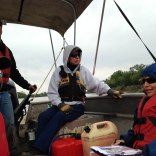
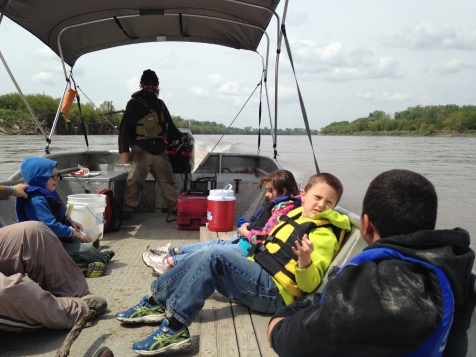
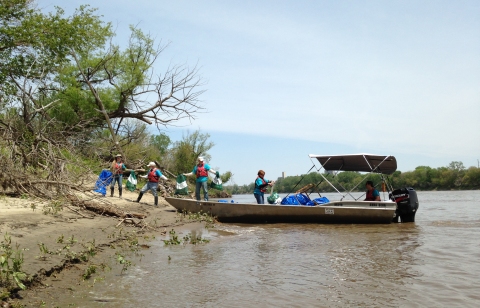
After a safety talk and getting fitted for life jackets, participants headed out onto the river! MRR had three boats on the water. 
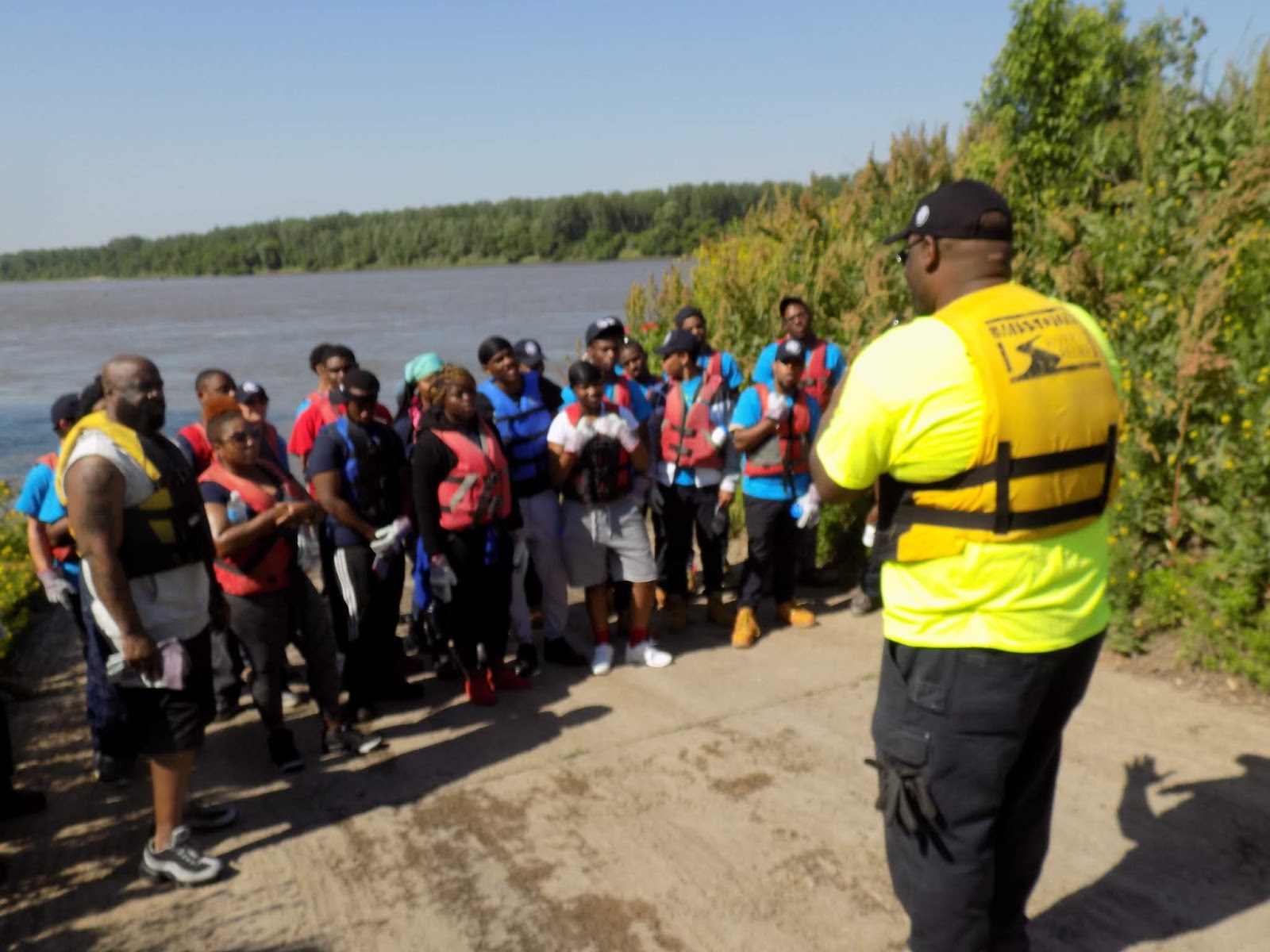
For a lot of AmeriCorps members, it was their first time on the Missouri River. 
Our experienced boat captains and deckhands gave the students a guided tour, pointing out an eagle’s nest as they passed it and sharing the history of the river. 


Looking in all the right places for river trash

Enjoying the river breeze with beautiful views of the bluffs 
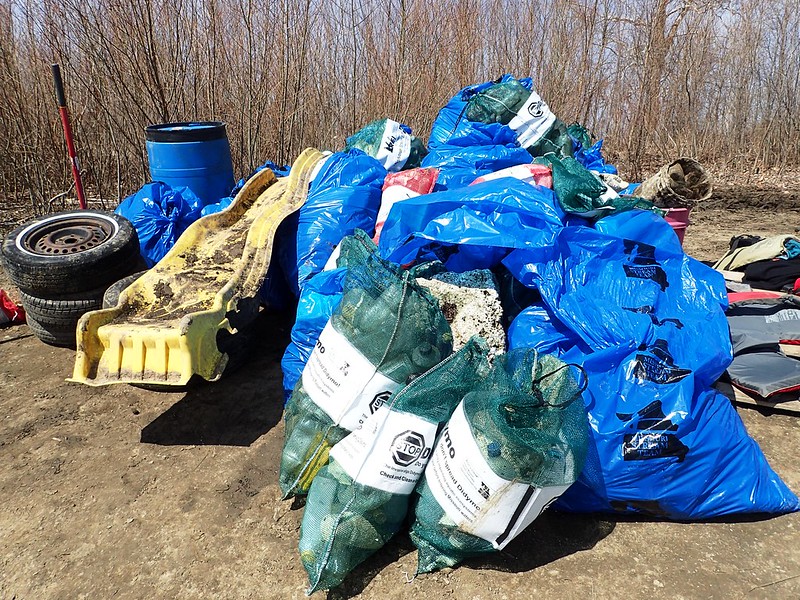
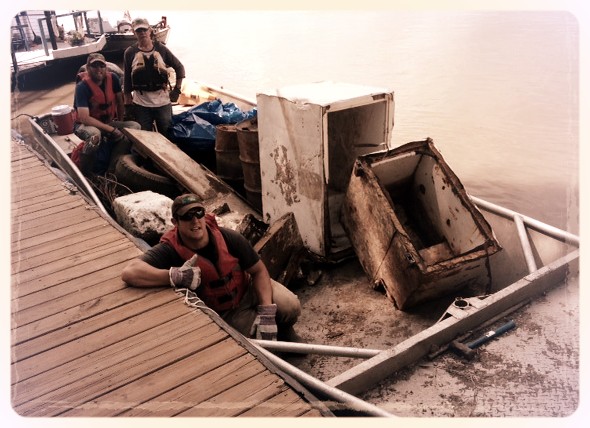
Some boats also stopped along the way to pick up trash. Here is the trash tally of what they found:
  • 21 bags of trash!
  • 55 gallon drum
  •   2 large Styrofoam chunks
  • 2 Large plastic tubs
  • Cattle feeding tub
  •  Large cooler (coffin cooler)
  • Plastic tool box
  • Large cooler
  • 3 tires on rim
  • Box tv
  • Fridge door
For many students, it was their first time out on the river. Because of this, a lot of growth happened.
At the end of the day as part of our group reflection, we did a whip around activity. The students stood in a giant circle and went around one by one, saying one word they used to describe the Missouri River before today’s program and one word to describe it after today’s program. 

Here are some things the students said: 
  • Before / After:
  • Big / beautiful
  • Trashy / cool
  • Watery / peaceful
  • Dirty / relaxing
  • Gross / refreshing
  • Dirty / fun
  • Scary / chill
  • Dirty / serene
  • Big / tranquil
The day was hot, but our students and presenters were champions and finished the day with smiles on their faces and chilled towels on their heads!

A lot of people helped make this program happen. A big thank you to our experienced boat drivers and deckhands: Steve Schnarr, Kevin Tosie, Jeff Boot Barrow, Patty Farrar, Steve Sadich, and Mike Crist. And our amazing presenters included Amy Meier, and Lily Kennedy with the Missouri Department of Conservation, Theresa Thomas and Lynne Hooper from Boone County Stormwater and Paige Witek from the Missouri RiverBird Observatory.

If you would like to learn more about MRR education programs, please contact Education Director Kristen Schulte at kristen@riverrelief.org, and check out our education program page!

December 9, 2015

15 Years of Tallying Trash

Well, I don't think we kept accurate trash tallies in years 1-7...but we did start compiling them and publishing them on here all the way back to 2008 under the tag "Trash Tally's.

2016 will mark 15 years for Missouri River Relief.  So what can we say about all of this trash that YOU have helped us collect?  Well, let's take a look.  (Also, check out a cool photo compilation of our 2015 Treasures)

Here is just a partial list of what YOU helped clean up in 2015, from St. Louis to Omaha:

2015 Trash Tally

1,340 bags of trash
139 bags of recyclables
7,070 lbs of scrap metal
485 tires
2 tire rims
312 chunks o' styrofoam
32 propane tanks
150 fireworks remnants
6 refrigerators
1 chest freezer
4 hot water heaters
1 pressure tank
1 Freon tank
27 coolers
13.5 chairs
4 TVs
3 gas cans
5 metal gas tanks
2 duck decoys
1 goose decoy
4 fishing poles
1 bow and arrow
9 - 5-gal. metal buckets
16 - 55-gal. metal drums
43 - 55-gal. plastic barrels
61– 5 gal. plastic buckets
9 2-gallon plastic jugs
2 small metal drums
2 20-gallon plastic water tanks
3 200-gallon oil tanks
1 trash can
2 mattresses
3 box springs
1 air mattress
3 fire extinquishers

15 Most Unique Finds in 15 Years

1.  Messages in Bottles (approximately 40-50 over 15 yrs)
2.  Chicken Dance Elmo
3.  1 Sturgeon DNA Sample from the USFWS
4.  Beavis & Butthead sitting on a Couch
5.  Wind Chimes made out of Bud Light Bottles
6.  1 pair of ruby red slippers
7.  Full Jug of Atrazine
8.  Pair of Angel Wings
9.  Giant Candle shaped like a Strawberry
10.  1957 fiberglass Saber boat
11.  1 set of national bylaws from the Hell's Lovers Motorcycle club
12.  1 Kilo of Cocaine wrapped in duct tape -turned into police
13.  Cobbler’s Shoes
14.  1 shot-up Sign that reads: “$50 Reward for information leading to arrest and conviction of any person or persons found willfully mutilating or destroying this sign. The O.J. Gude Co. NY”
15.  Dead Baby Dolls--Doll Parts-- and one Inflatable Love Doll

plus many, many more strange and unique items:


Saddest Item:  Dead Garter Snake entwined in Fishing Line
Strangest:  so many kids toys, how do these end up in the river?
Curious:  I always find it strange that we find so many fire extinguishers, we probably find at least 5 a year.

1 replica of the Ameristar Casino behind the Ameristar Casino in St. Charles
1 Leopard Print Stiletto
1 boot filled with concrete
2 1/2  Jet Ski's
1 Nintendo Gun
1 Blow Up Can of Pork and Beans
Hot Tubs (at least 3)
1 “The 4 Most Important Things I Know” CD by Pastor Brian Zahnd with the Word of Life Church in St. Joe, MO still in the wrapper
2 live blue catfish attached to a free floating jug
1 antique sewing machine
1 airplane sponson (pontoon)
1 frisbee "Look Who's Over the Hill and Can Still Get it Up"
1 plastic Swampthing Toy
1 Dog Collar w/ complete dog skeleton & rabies tag
 The body of an Electric Guitar
1 unopened bag of Fruity Pebbles
1 framed dolphin print
1 desk and the entire contents of a person’s office, including file cabinet, electronic goods, computer manuals, briefcase, a Bible and much, much more dumped along the Riverfront trail and covered with a tarp
1 Adam Sandler DVD "Going Overboard"
1 Glass Chandelier
1 Studebaker hubcap signed on the inside with a name & city from Oklahoma
1 full, sealed bottle of Virex AIDS medication (valued at $400)
1 steel trap w/ finger bones
1 My Little Pony Lunch Box
1 very ugly Old Woman Rubber Mask
3+ Christmas Trees
1 Teletubby
1 Piano
1 16” Ice Skate
Several Ceramic Toilets

And the Kitchen Sink!

and then there's the...

Top 10 Most Common Items Found on the Missouri River

#1 - Styrofoam
#2 - "single-use" Plastic Bottles
#3 - "single-use" Plastic Bags & Food Wrappers
#4 - Other Plastics (bottle caps, straws, chewing tobacco cans and 5-hour energy bottles)
#5 - Tires
#6 Plastic Buckets, Barrels, Tubs & Coolers
#7 - Scrap Metal (steel cables, rods, angle iron, metal strips, poles, t-posts, sheet metal, rebar, etc.)
#8 Balls of every shape, size & color
#9 Shoes & Flip Flops
#10 - Fireworks Remnants, Party & Fisherman's Trash

This is obviously a very generalized list for a graphic I'd like to work up.  But I think it reflects what we find out there based on compilations of trash tally's I have been pouring through.  Since we don't tear open every bag of trash and count it, I really can't give you accurate data.  Just pieces.  Like this one...


September 24, 2014

Of Sharks and Cleaner Fish

by John Brady

Right now I am in recovery mode. I am home after some days on the Missouri River working with others to clean up the river valley and celebrate its noble presence in our lives. The last two days were a time of great effort for the volunteers and crew members of the Big Muddy Clean Sweep.

 We did all of our normal preparation for a large scale river cleanup plus helping set up and break down the structure for a River Festival. That work continues today and most likely tomorrow with dealing with all of the trash removed. I shall rejoin the effort in an hour or so.

But right now, between the loads of laundry, I have time to write a bit and reflect on the meaning and value of the events of yesterday. The cleanup was extraordinarily difficult, as recent flooding on the river made conditions a lot more of a challenge for our crew. As usual, they adapted and found ways to accept and deal with all of the problems that cropped up.

As I was piloting one of the work boats between running cleanup volunteers out to the sites they would clean, running up the wide and smooth river back to pick up another group, an image came to my mind about what we were doing out there. It seemed to me for a moment that today, the river was like a shark in the sea of our environment.

It has been living, evolving and constantly moving through its valley just as a shark roams the ocean, never stopping, always roaming on the move. It is hungry for some things, taking them into its belly in a thrashing feeding frenzy of flood. A river bank here, a fish camp there, it feeds indiscriminately for its time of need and then goes placid, a benign and serene beast, its awesome power hidden to the unknowing eye.

In the shark’s world, there has evolved a species of tiny fish that maintain their lives by cleaning the bodies of the larger fish, the sharks, tuna and other species of the deep ocean. The large fish lay still in their presence, almost in a trance as these cleaner fish remove dead skin, parasites and other things that attach themselves to them. The cleaners even swim into the sharks great open mouths, fearless of the awesome power within.

Today, the cleanup volunteers scrambling up its banks seem to me to be like the cleaner fish that attend the sharks in their shared realm, calmly tolerated by the mighty fish, cleansing and beautifying its body as they remove the parasites and vermin that infest its skin. In this symbiotic ritual, I can see how we mutually benefit each other. In return for the many gifts the river offers up not only to those that have no conception of how it enables our lives, but to these cleaner fish who give back to it the gift of loving care.


The image dissolves in an instant as I give the tiller a sharp jerk to avoid a just recognized floating log. I miss the log and almost tumble my crewman from his seat. He looks back startled for a moment and then realizes that I still have control and turns back to enjoy this brief respite from the hard part of our work today. I too, am back into the day, far richer for having in my consciousness this vision of my value to my beloved river.

As we, this crew of cleaners evolve into a group united by our love of and service to this great resource, the river runs as it always has, a beast of great power, unbelievable beauty and calm serenity. I realize again in this moment how blessed we are to have this day, this crew and this river.

June 4, 2014

Hot Enough?


published by John Brady on June 2, 2014

This morning started with a short cup of coffee, some granola with blueberries and some stretching exercise. I knew I had to fuel up well this morning as I was to accompany a River Relief “Tiger Team” into some gnarly river-side woods to finish up bringing out the last big items of trash discovered during two recent forays into the area by two different groups of crew members. 

The area is owned by the US Army Corps of Engineers (theoretically, that’s you and me, with others). It lies along a functional chute through an area that has been known as long as I can remember as “Party Corner”.

Out along the road that runs along the property and beside the river, just about every weekend different groups of nature lovers shamelessly drop their beer cans, garbage, fireworks wrappers, used diapers and worse. We have cleaned up there many times. 

This project was special, however, as we were to go into the thick of this wedge-shaped parcel by boat and attempt to clean it of all of the flood deposits of trash from the last decade. The USACE had contracted River Relief to do the job in return for a modest amount of much needed cash. It was a project that our executive director made happen in the hopes we could knock it out quickly with a minimum of expense.

So in went the four of us around 9 a.m., just as the temperature and the relative humidity both hit about 88. Sweat was copious just trying to walk into the stashes of refrigerators and tires through the knee-high Japanese Hops (an invasive vinous plant whose leaves irritate bare skin) and over the numerous hidden down falls. It was hot, sweaty and miserable work.

As Jeff and Alex carried tires and barrels out to an open spot on the high bank, Steve and I went to work with a chop saw on a mud-filled refrigerator Alex and I had disinterred on the first go-around. 

Thank the gods for power tools! 

Refrigerators are difficult to deal with when embedded as sawing them up entails fighting the foam insulation infused with mud that drags the saw blade speed down so that the only way to make progress is with little bites and chewing thoroughly. We then packed all of the pieces out to the river bank cache.

The boat was then carefully brought down and the heavy objects lowered down the bank with a rope and carried into the boat. In about an hour and a half we were done there and panting in the boat between deep draughts of cool water from the water jug. 

Grimy all over, we agreed with Jeff’s idea of going across the river to see if we could spot through the recent growth the two refrigerators seen on a high bank during a previous trip through that area.

Sure enough, eagle eyes and honed institutional instinct soon spotted both of them. One by one they were lowered down the bank and wrestled into the boat. After a careful round-to, we turned on the air conditioner (throttled up on plane and made our own breeze). All of us were wet down to the knees with sweat. 

Soon we had the nearly full 24 foot “Hildy” on her trailer and headed for the scrap dealer’s and the land fill. A small job, truthfully, but in essence our history is one of many “small jobs” knitted into a body of work that has affected many people and communities in over 700 miles of the Missouri River over the last 13 years.

It truly is a disease and we have it bad. 
Yeah, today was hot enough for most anyone. 
 
The work was cool enough for us. 

See you on The River!

May 27, 2014

{Reconnaissance and Relief}

St. Joseph Missouri River Clean-up
Saturday, May 17, 2014
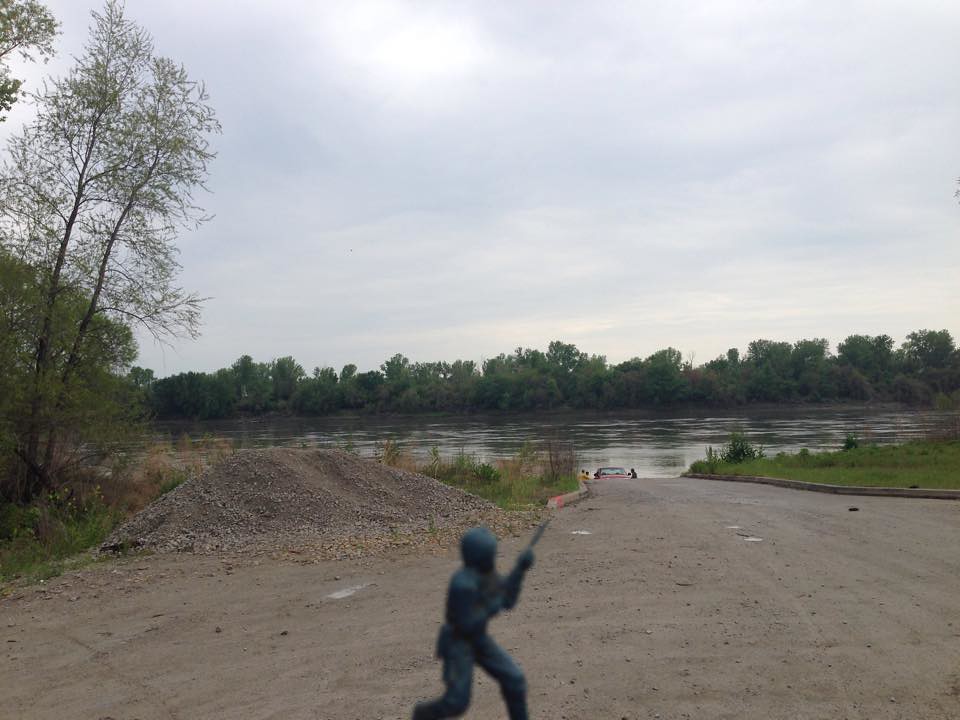
French Bottom Boat Ramp, St. Joseph, MO

Blogmaster's Note - This blog was originally posted by our amazing writerly volunteer Tina Casagrand on her personal blog "The Gasconader". Check out more of her insights there. 

Text and photos by Tina Casagrand

Ahoy! Results are in for Missouri River Relief‘s cleanup at St. Joseph, Missouri (you can find them here)  This was my third away-team cleanup as a crew member. My first experience with the group was back in 2009, and despite attending dozens of events as a regular volunteer, it’s impossible to know just how much work goes into preparing for these things.

First, there’s the matter of time and location. Where’s a good boat ramp to conduct a cleanup, and where can we camp that’s reasonably close? At St. Joe, we lucked out with Remington Nature Center hosting us on its grounds, just a parking lot away from the boat docks. We cut driftwood behind the building and established a kitchen underneath it, pitched tents by Roy’s Creek, and built a campfire laughably close to the city’s riverside bike trail.

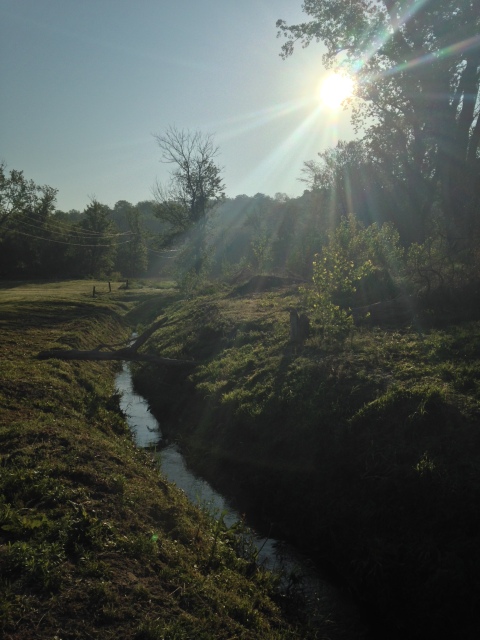
Sunrise on Roy's Creek. I wouldn't mind unzipping my tent to this every day.
Sunrise on Roy’s Creek.
I wouldn’t mind unzipping my tent to this every day.
Photo by Tina Casagrand

And then there are logistics of the cleanup itself.

Since an aerial trash scout in 2011, it’s been a little easier to spot dump sites on maps. Even so, there’s a lot of foot work for crew members to find litter that’s washed in by recent floods. The day before a big cleanup, we scout for sites up and downstream, about five miles each way, on both sides of the river. A few people are elected dispatchers and assistants, a couple drive the boats, and the rest of the group piles in to check out the damage.

The river was low that week, meaning steep and muddy banks. Melanie, Jennifer, and I scrambled up them into the woods to find trash caught behind logs and foliage. Surprisingly, there wasn’t a lot to find, maybe because the river is so straight and swift in this channelized stretch by the city. I did, however, eat a bowlful of lamb’s quarter, watch several Common Yellowthroats flitting through the woods, and even scared up a Nighthawk! Seeing a Caprimulgid in the daytime was a first for me. Just one of the little serendipitous joys in getting outside.

2014-05-16 17.10.01
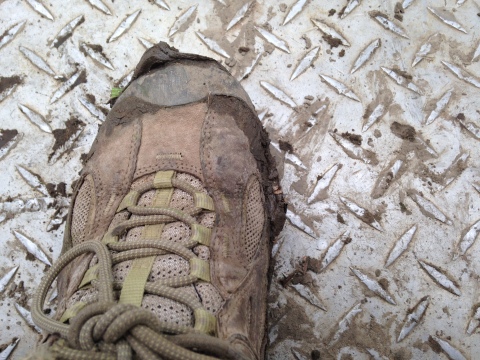
Boots get muddy. Boats get muddy. Mud gets muddy.
That was Friday. A pretty easygoing day, although the scout does get tiring after a while. We assign jobs for the crew the night before, and get started really early the next day. Like, 6 a.m. breakfast early. On a Saturday! Then follows this volley of set-up, registration, driver meeting, volunteer orientation, safety talks and finally–rejoice!–getting out on the boats.

It’s a lot to do before noon, but we pull it off flawlessly, crew members filling in wherever they’re needed. Because turnout was fairly light this day, the drivers and first mates got to stay with their boatful of volunteers instead of leaving to get another group. That was awesome for me, as I got more alone time in nature, and was able to hang out with a totally precious gang of 7-year-old bicyclists. On the way back, when I ate an orange and tossed the peel in the stream, one of the kids looked totally disappointed. “Eli, what’s wrong?” He threw his palms in the air and said, “You’re littering!” in such a dismayed voice that I’m sure my response of, “don’t panic, it’s organic” would fail to redeem my sin.

After the cleanup, we give lunch to our volunteers, host and judge a trash contest, chill for a while, then peel out in the boats again to pick up the trash. Volunteers leave their bags, tires and other stuff on the shore. We pick it up in the afternoon in a streamlined fashion.

2014-05-17 14.01.59
This, my friend, is a well-orchestrated daisy chain of trash.

2014-05-17 13.33.01
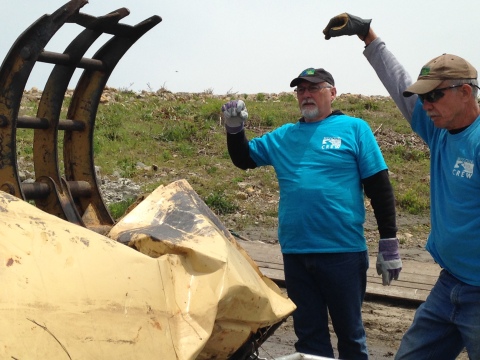
John Brady is our premiere frontloader communicatuer.
Here, he’s telling the driver to smash down on this refrigerator.
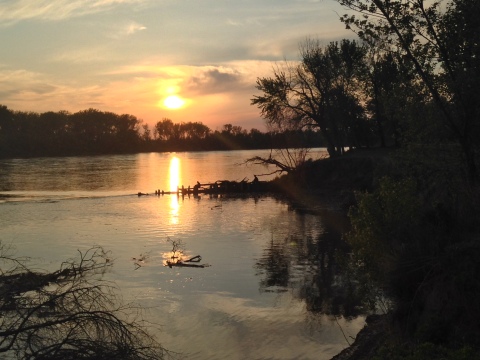
I’m a little exhausted just writing about this. Which is ok, because feeling exhausted means you did a lot of hard work, eh? And what better frame of mind for a sunset walk on a trail by the river? This was one of the most beautiful sunsets I’ve ever seen, seriously. Even my fancy new iPhone (hey world, I finally upgraded!) couldn’t capture it’s glory, but here. I tried.

2014-05-17 20.04.02

You can catch me at the next river cleanup at Leavenworth, Kansas, and Weston, Missouri the weekend of June 7. Seriously, come if you can (free boat ride and fuzzy feelings), and if you can’t, follow my Twitter and Instagram. (Yep, Instagram. That’s new for me. Give me something to follow!) I’ll bring you along for the ride.